Users can investigate the product itself
They can fine-tune appearance, request new functionality, and troubleshoot mismatches until it becomes clear whether the issue is company policy, a bug, or simply a wrong assumption.

The host product here is HR software, but the real story is the Builder AI agent inside it: a customer-facing path to request UI changes, new functionality, and problem investigations, while the vendor keeps review gates, traceability, and release control.
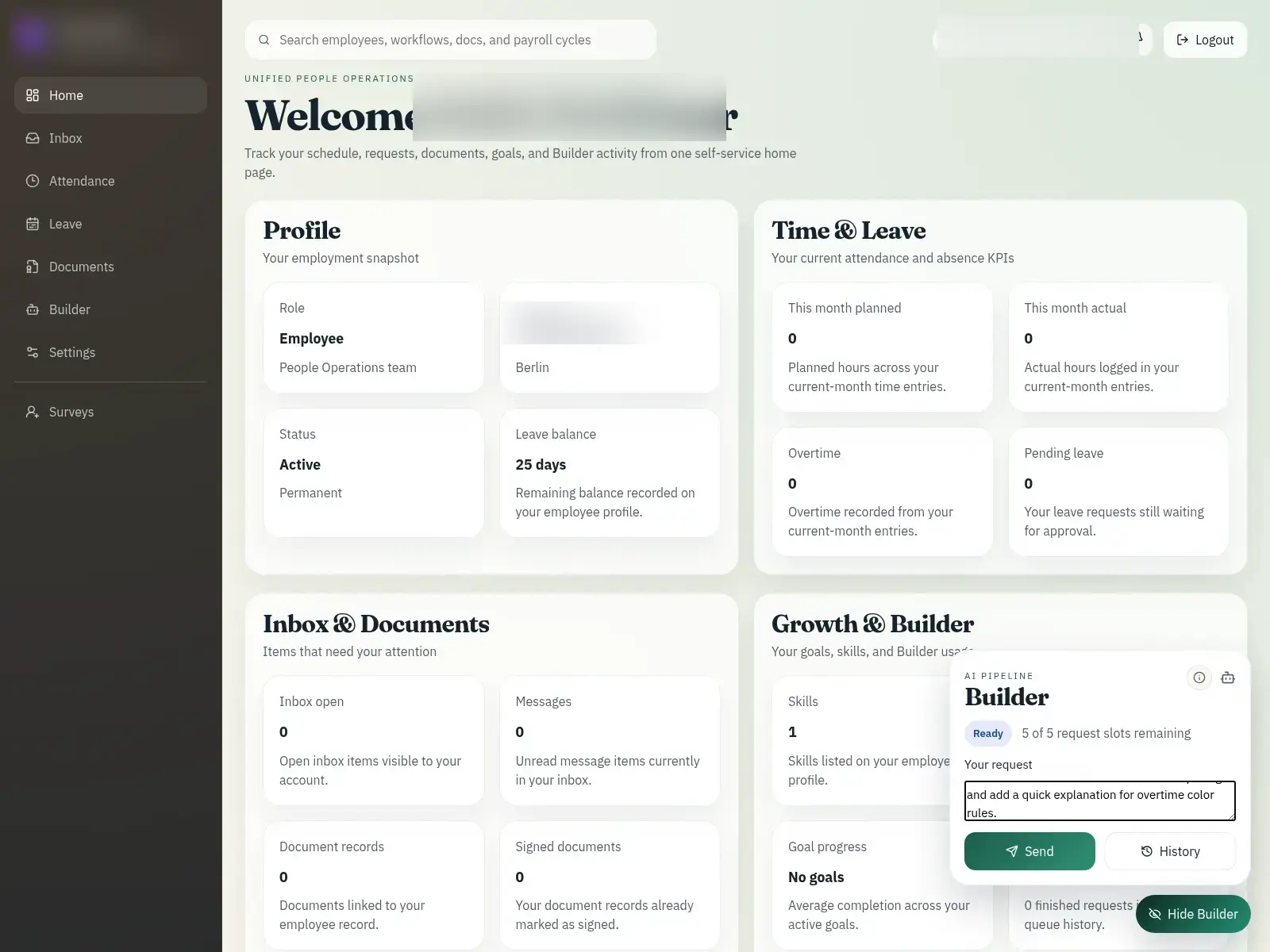
They can fine-tune appearance, request new functionality, and troubleshoot mismatches until it becomes clear whether the issue is company policy, a bug, or simply a wrong assumption.
Software vendors can offer Builder as a paid or premium service: customer requests move through a visible AI-assisted workflow instead of disappearing into vague ticket queues.
Vendors keep one core product while customers and AI create a wide variety of tailored versions through guided requests, review, and controlled deployment.
The best feedback comes after users test whether their own request actually helps them. Builder creates that proof before the vendor invests heavily in polishing the idea.
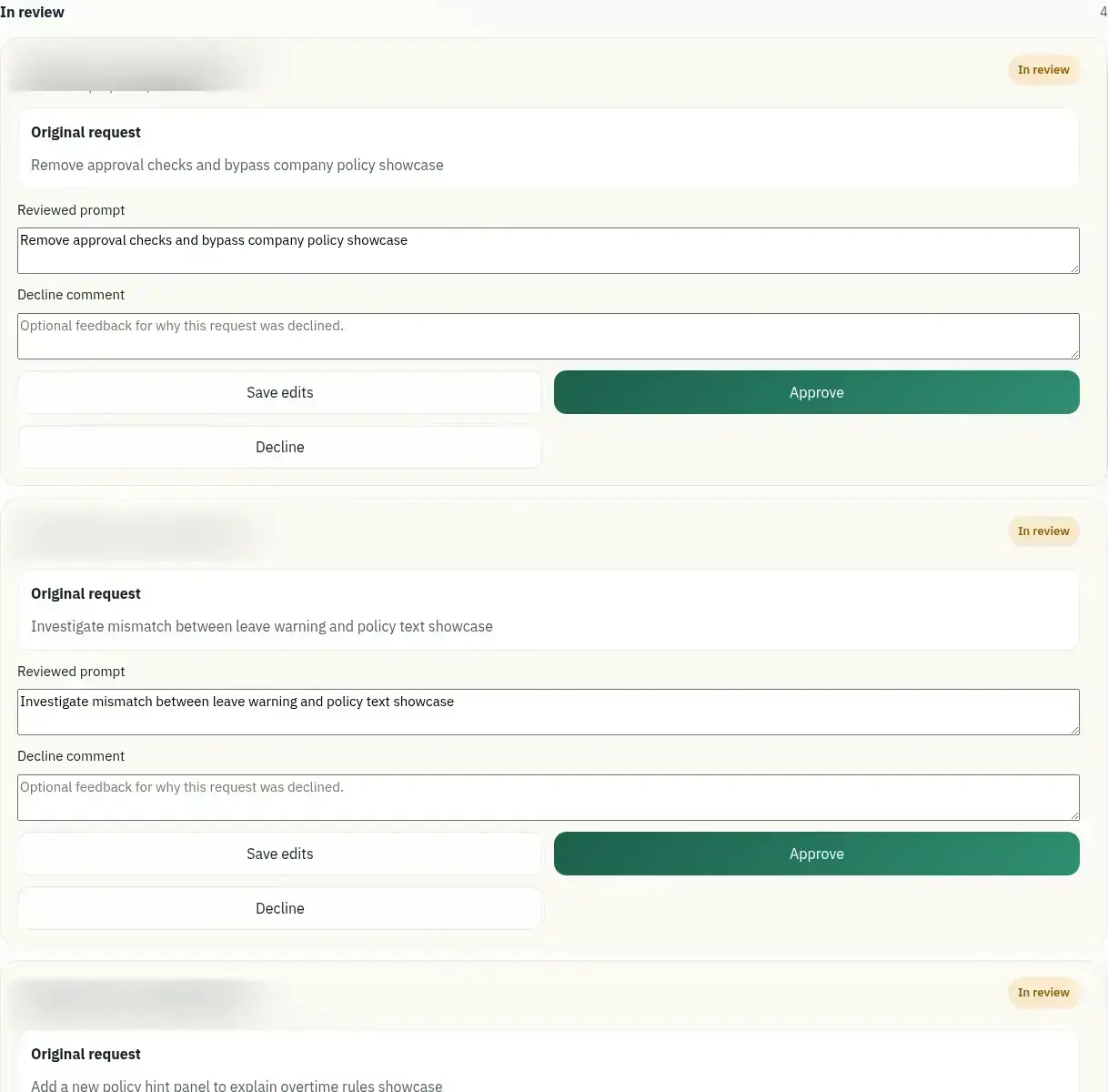
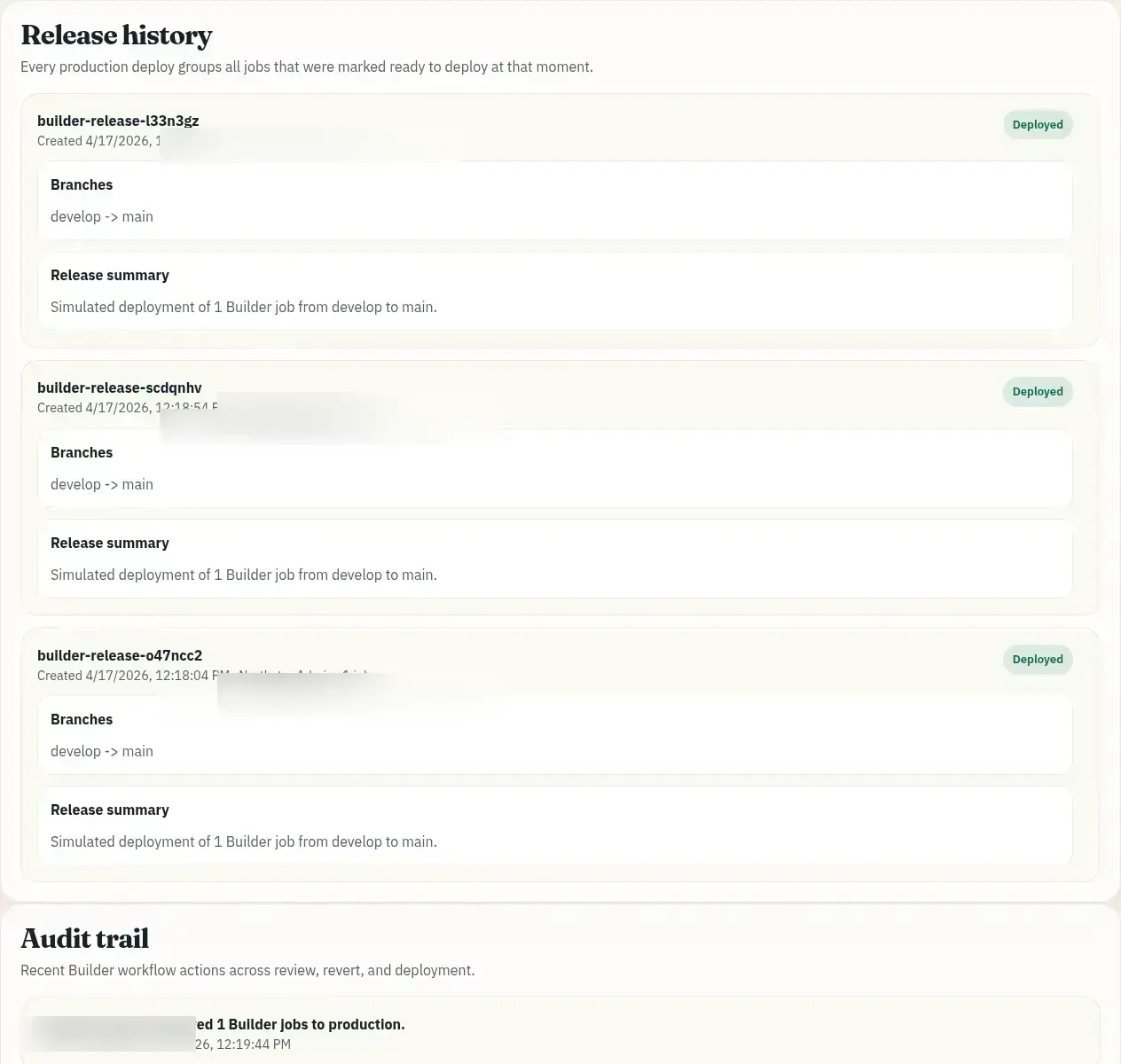
The user does not just submit a ticket and wait. They ask inside the product, see the request move through review, and can validate whether the proposed change actually helps.
That means vendors get feedback after the idea meets reality, not only from speculative feature requests.
The same Builder pattern can fit many operational products. This showcase uses HR software simply because it is a realistic environment with policy rules, permissions, shared data, and visible business workflows.
The core value is the Builder AI agent as a customer-facing product layer.